


7–8 March 2026
Maison de la Rivière, Tolochenaz
BioThermal HP presented at the Maison de la Rivière as part of the Festival du Film Vert.


New patented technology
 BioThermal HP
The green roof for active heat recovery, in step with consumption
Heat and cool with renewable energy, silently in the city and elsewhere, filter and retain water, sequester CO2, promote biodiversity, fight urban heat islands, insulate against heat and noise, and extend the lifespan of a roof? Discover our integrated thermal regulation solution: efficient, ecological and intelligent.

Technology
By investing in technological innovation, we meet the challenges of our time with efficient and profitable solutions that improve quality of life and support the transition to a more sustainable future.
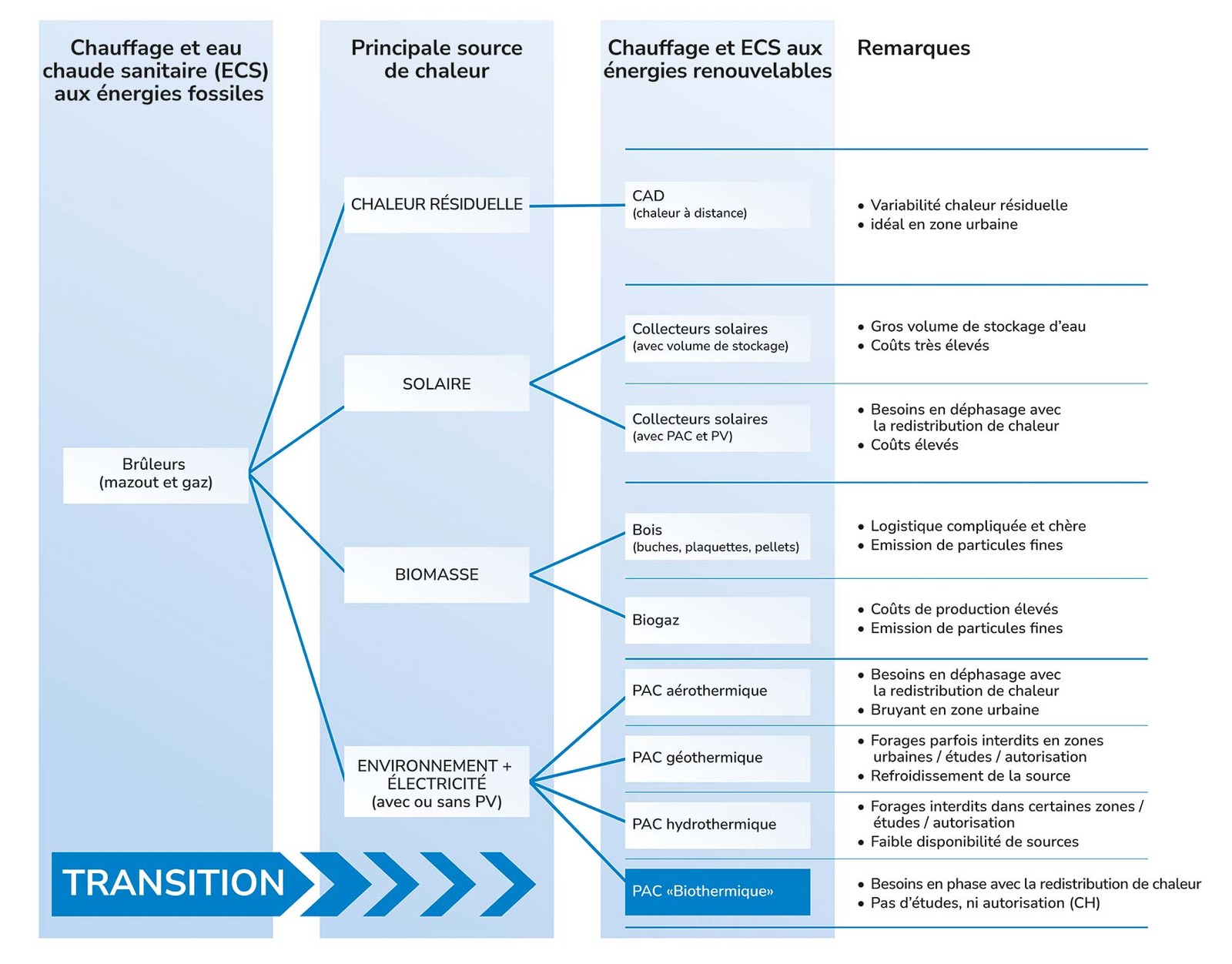
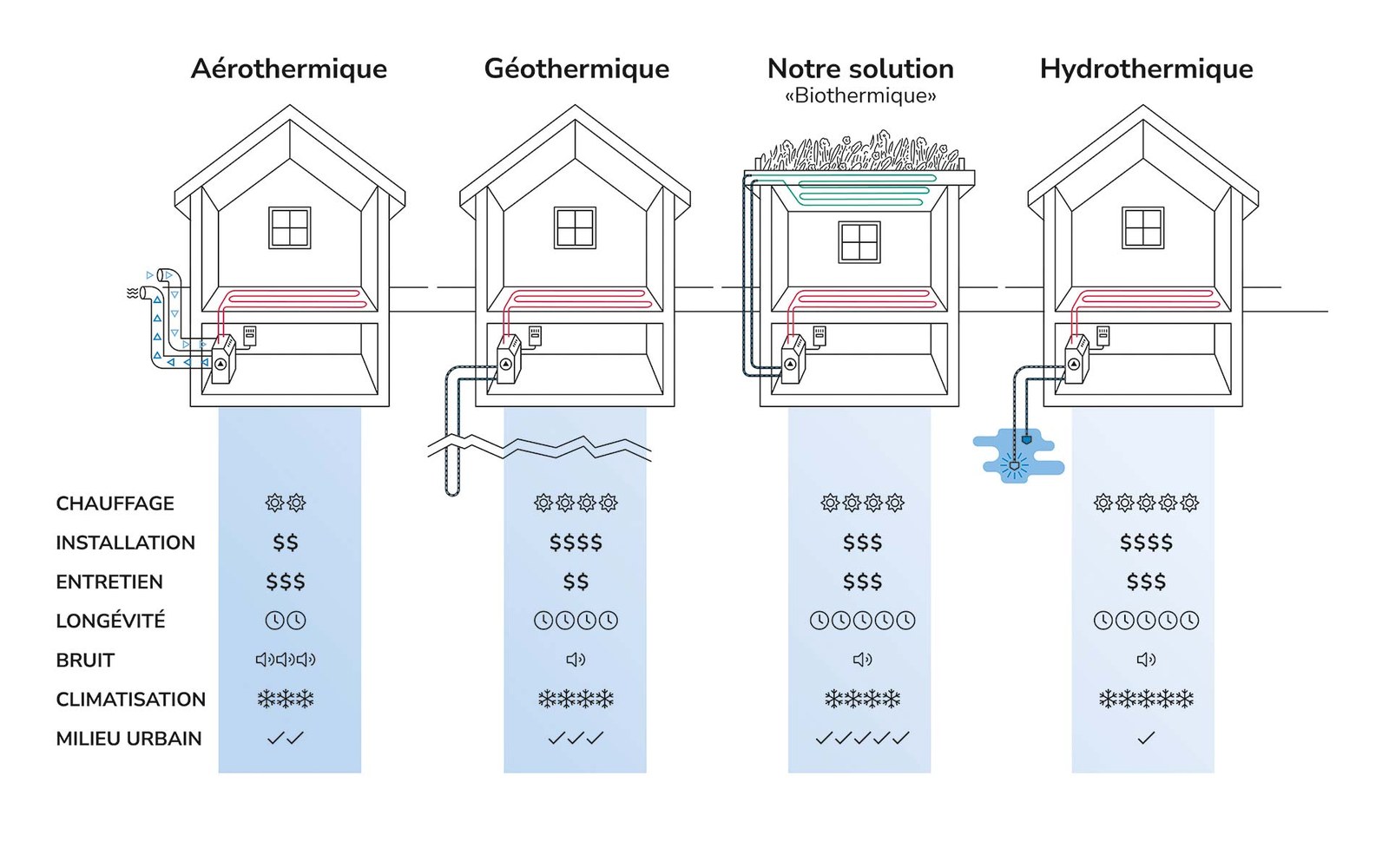
Patent details
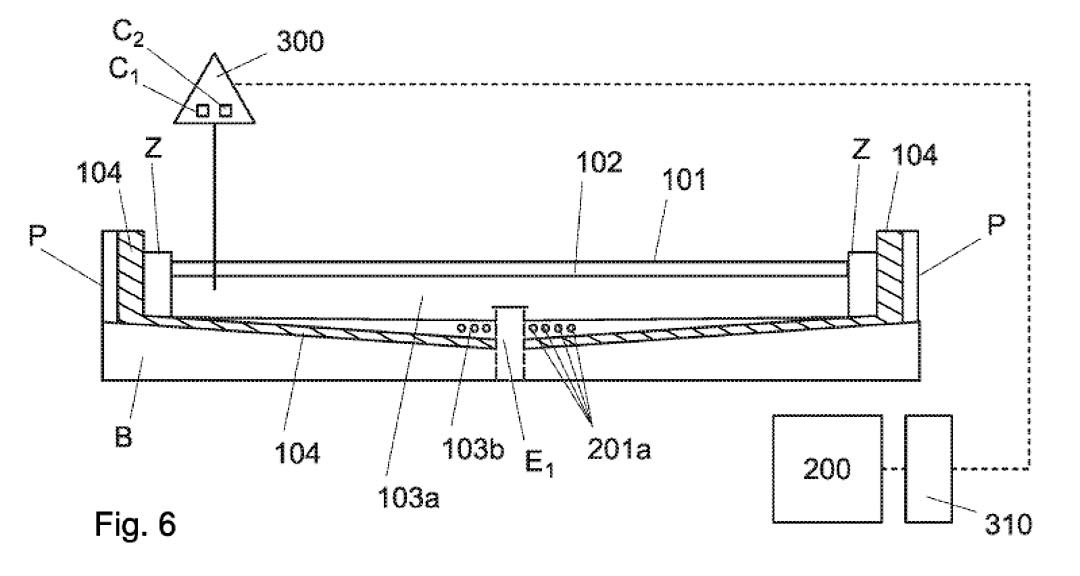
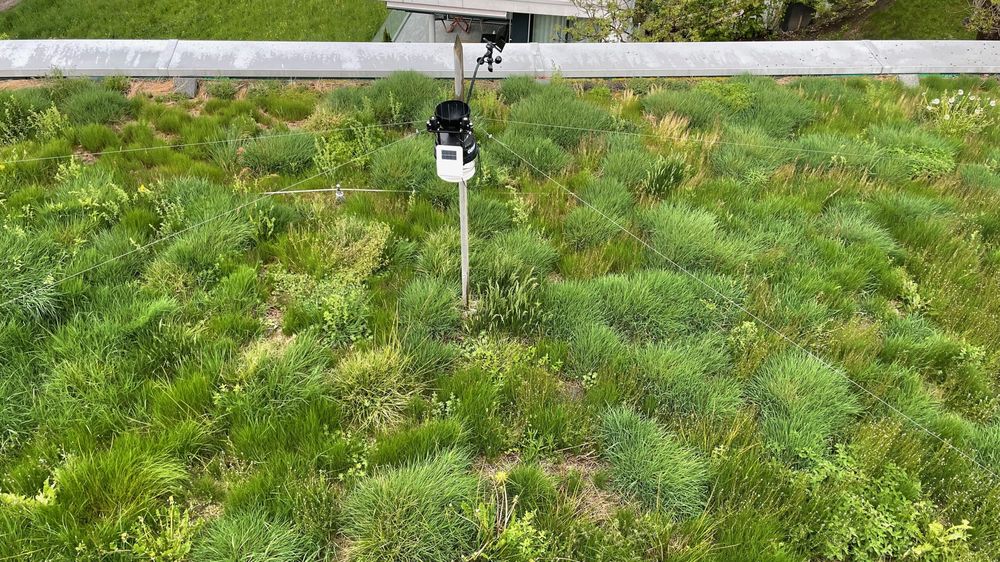
A flat green roof, a substrate partly saturated with water and a collector network connected to a water-to-water heat pump: the roof becomes collector, storage and natural air conditioner all at once.
The vegetation is a mix of non-woody plants, including mosses that occur naturally on flat roofs (or are planted).
The substrate is porous, lightweight and rot-proof. In its saturated part, water is trapped in the pores: there is no water movement and no heat loss by convection (unlike a swimming pool).
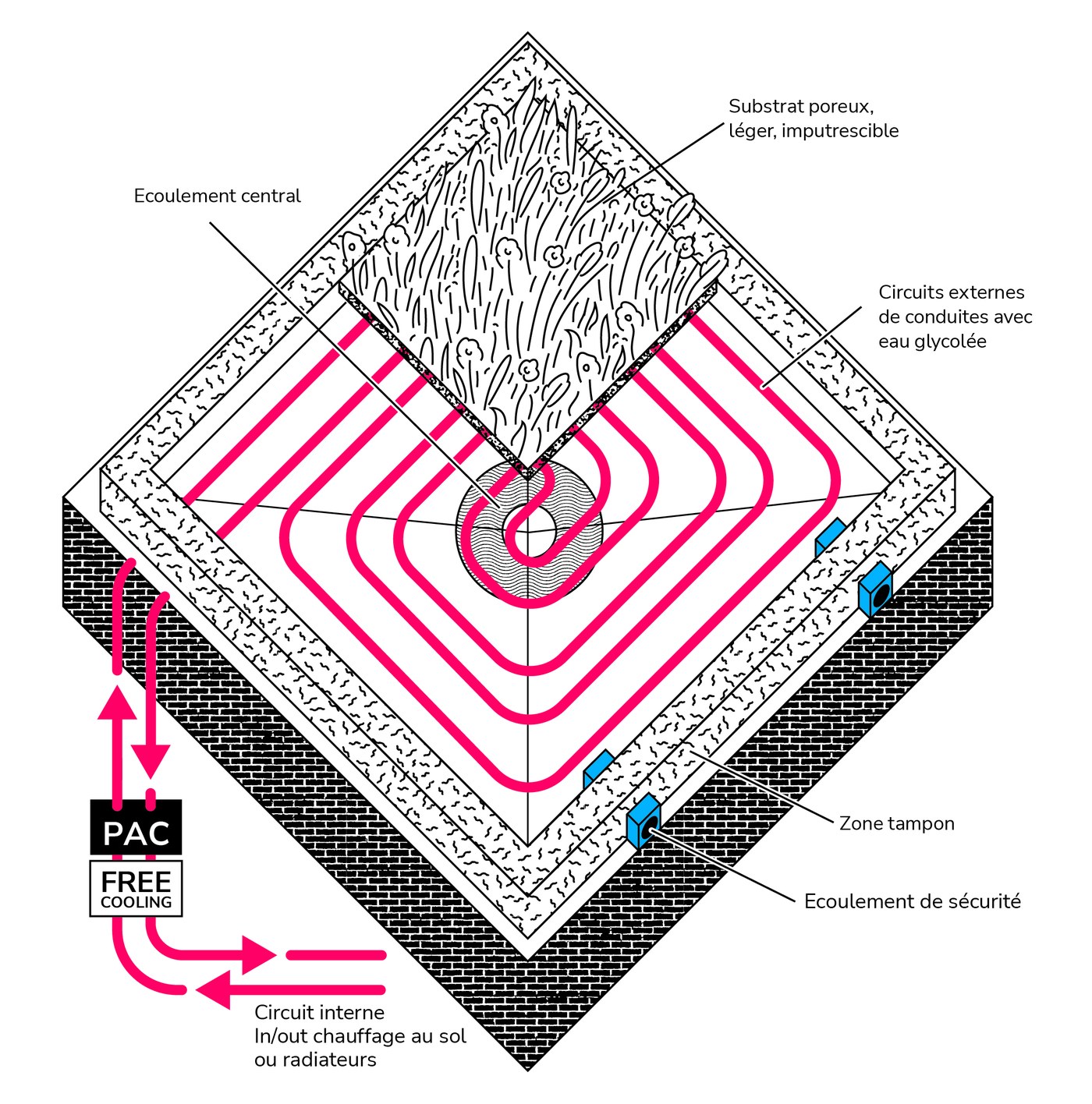
The water pipes are fixed to a flexible, non-metallic frame that absorbs volume changes caused by water and temperature differences.
Thermal separation (good insulation) divides the building from the heat exchange system. Heat is exchanged actively between outside and inside.
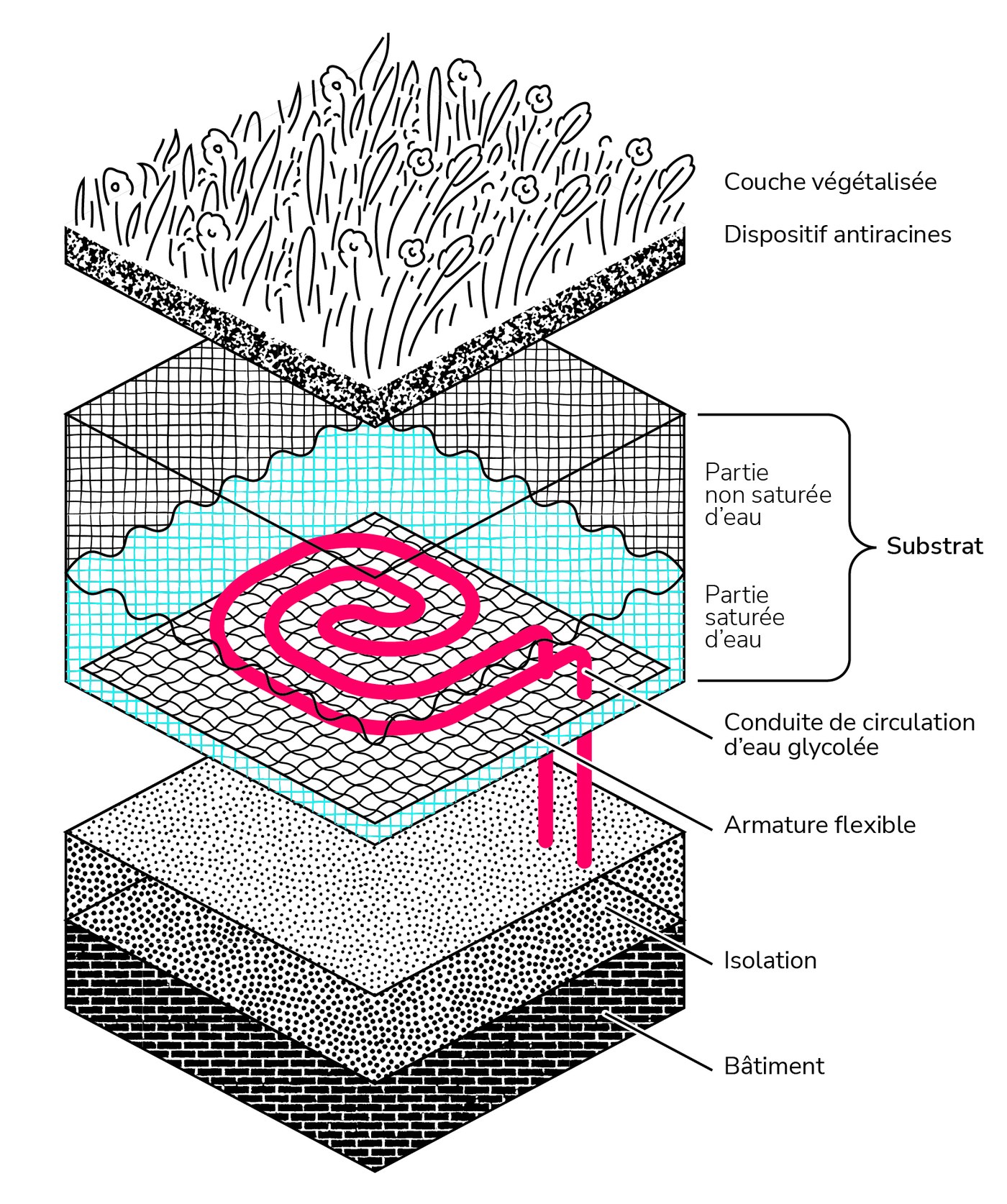
The vegetation layer of mosses and herbaceous plants has an exceptionally high leaf area per square metre. This large contact surface with humid air causes intense condensation (as well as freezing and sublimation), recovering a large amount of latent energy. Sun, air, rain and some building structures are further inexhaustible heat sources.
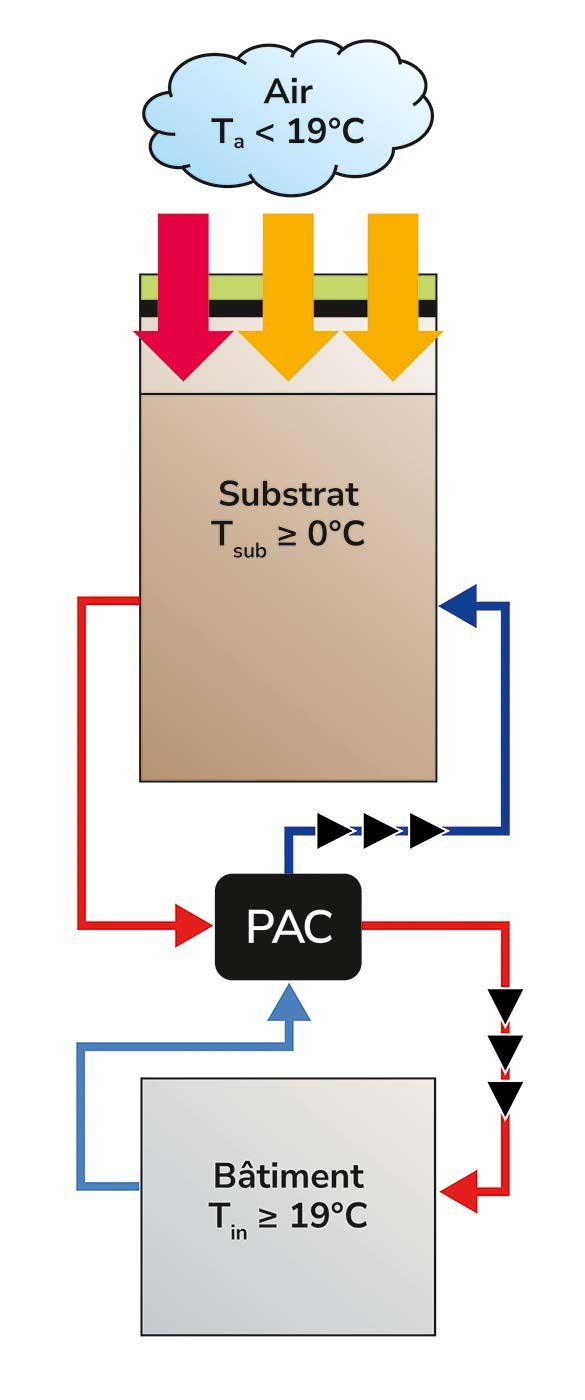
The water-saturated substrate stores these inputs and transfers them slowly downwards, shifting heat availability to match demand: a higher performance than an air-source heat pump, which depends on the day-night cycle.
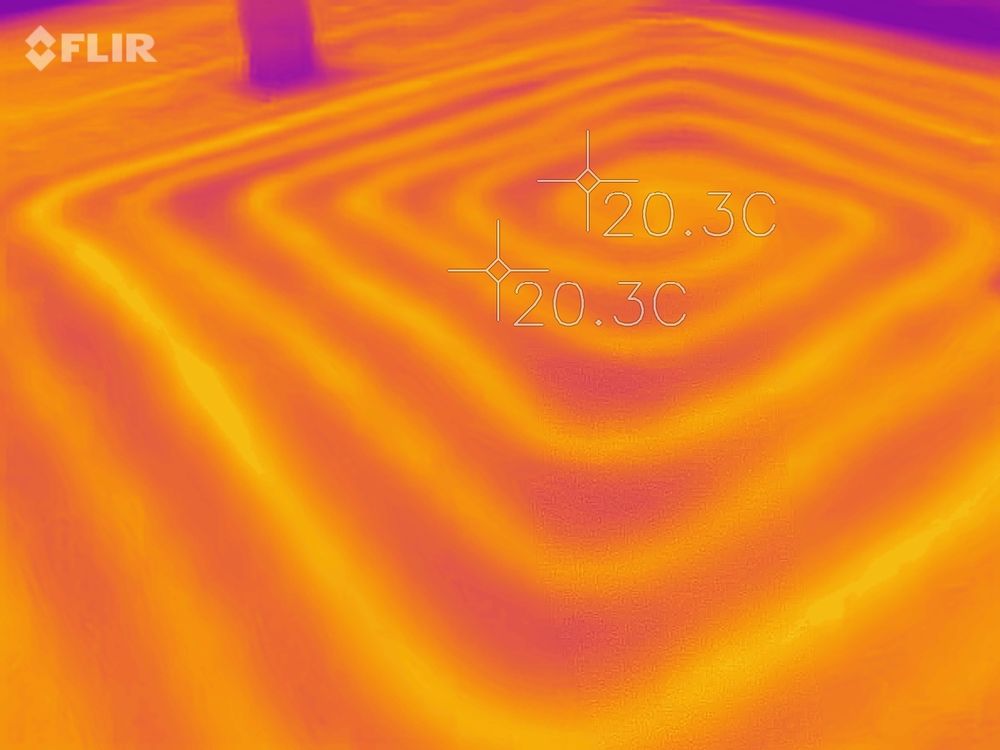
The network lies a few centimetres below the surface, at the bottom of the saturated substrate, and stays frost-free in mid-winter thanks to the strong temperature gradient. At equal source temperature, the water-to-water heat pump achieves higher COP and SCOP than ground-to-water or air-to-water units. The system recharges every day, with no decline in source temperature over the years.
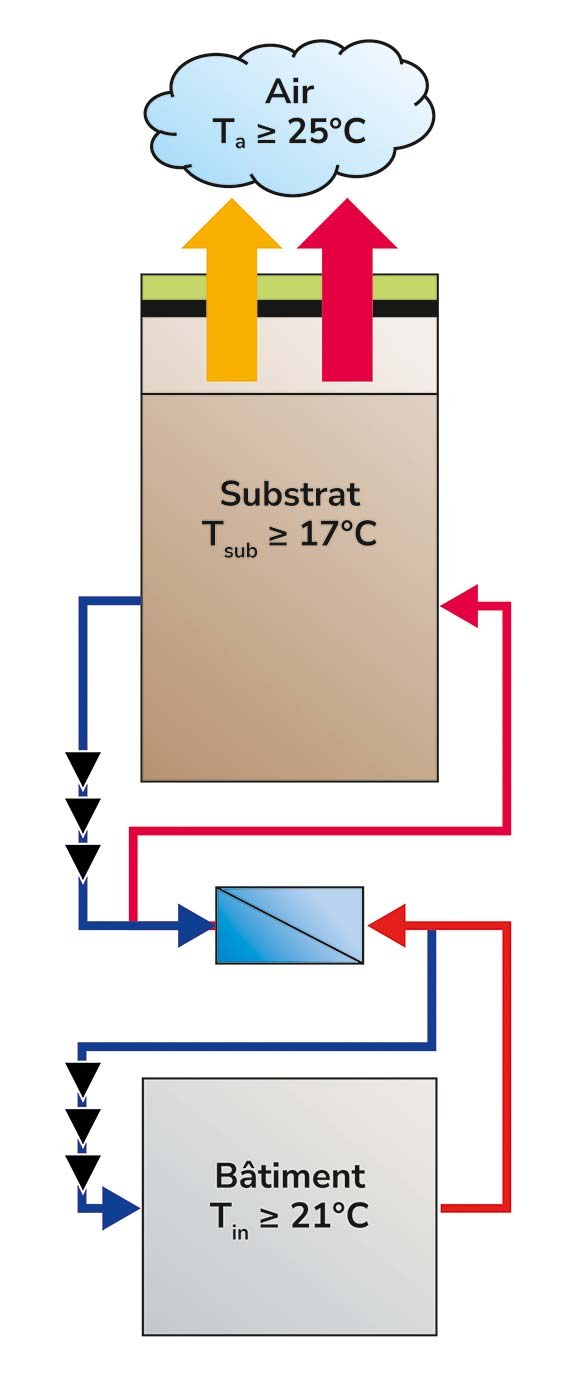
Mosses have no stomata. In summer they evaporate and transpire much more than other plants and naturally work like a reversed heat pump. This cooling requires no heat pump.
Evapotranspiration draws heat out of the system: the substrate can be 6 to 10 °C cooler than the air – enough to cool rooms pleasantly at low cost. The external circuit transfers heat to the internal circuit through a plate heat exchanger.
In summer, the heat pump can produce domestic hot water very efficiently; by drawing heat from the substrate, it further improves cooling.
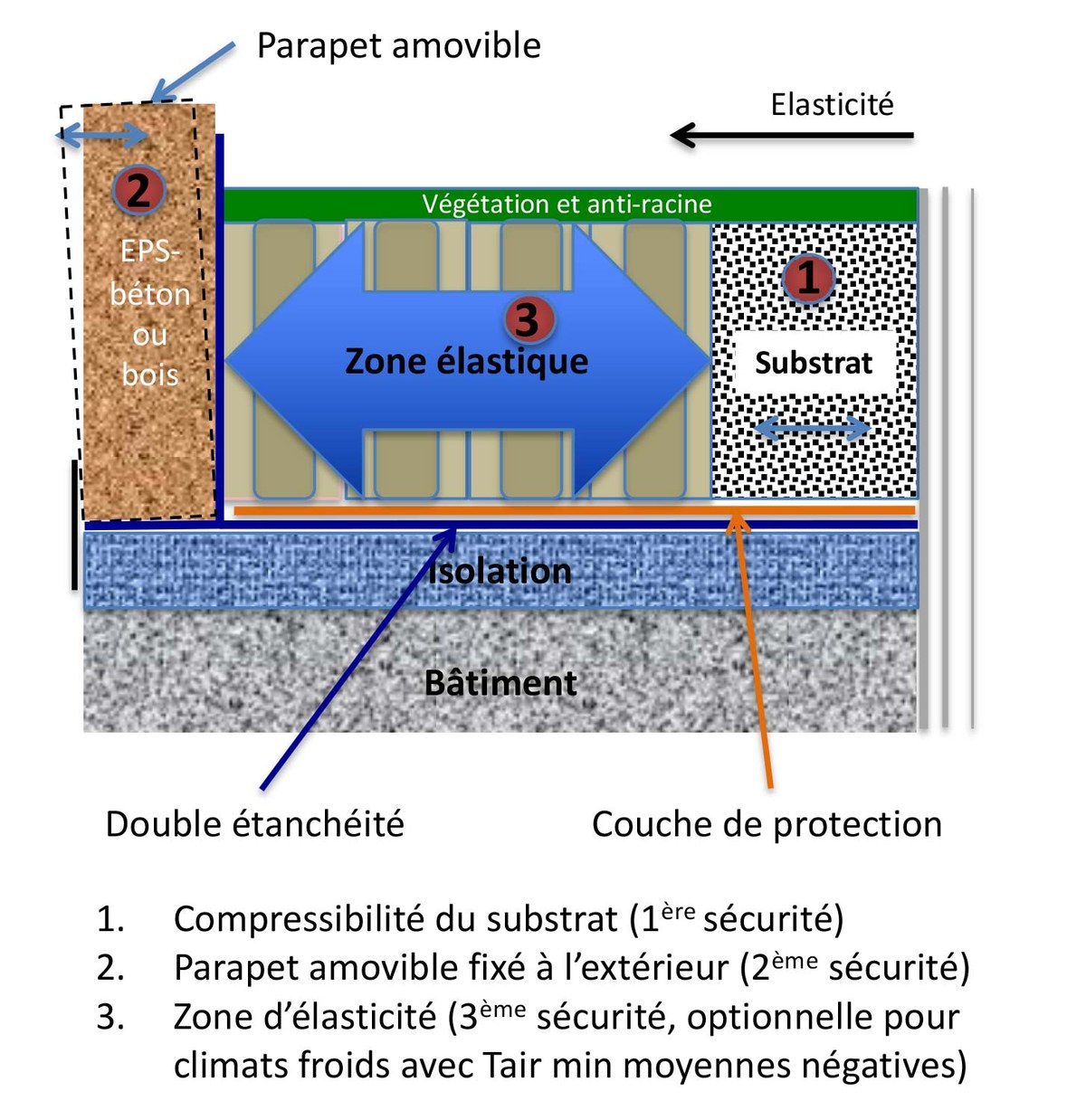
Where average minimum air temperatures are below zero, three safety features protect the system: the compressibility of the substrate, a removable parapet fixed on the outside and, optionally, an elastic zone.
One or more sensors (C1, C2) measure environmental parameters, and a control unit (300) processes the data to drive the heat exchange system.
The recorded data train an artificial intelligence algorithm that determines the heat exchange parameters between the inside of the building and the system.
Benefits
In areas with noise restrictions and where geothermal or groundwater probes are prohibited (underground pipes, aquifers).
The water in the substrate acts as a thermal battery. At equal source temperature, this water-to-water system is more efficient (COP, SCOP) than air- and ground-source systems (6 years of comparative data).
Depending on insulation and number of storeys, the system supplies all the heat or works in tandem or alternately – for example with an existing fossil heating system during a partial renovation.
No gradual depletion of the source as with geothermal probes. On overcast days, indirect radiation still adds about +50%; rain, air and structures add more.
In summer, producing hot water improves cooling. In winter, drawing heat encourages dew formation and the transfer of latent energy from the air to the substrate.
No acoustic or geological studies, no drilling. In Switzerland, as for a green roof (excluding terraces), a simple notification is in principle enough – no building permit.
Cheaper than geothermal probes, more expensive than an air-source system, with economies of scale: adding circuits costs less than adding boreholes.
Can be combined with photovoltaic panels or solar thermal collectors to aim for 100% self-consumption.
Relatively low vegetation, kept in check by low pH, oxygen depletion and a root barrier that prevents woody plants from growing.
Harvest energy and green the roof, meeting the many challenges of the energy and ecological transition.
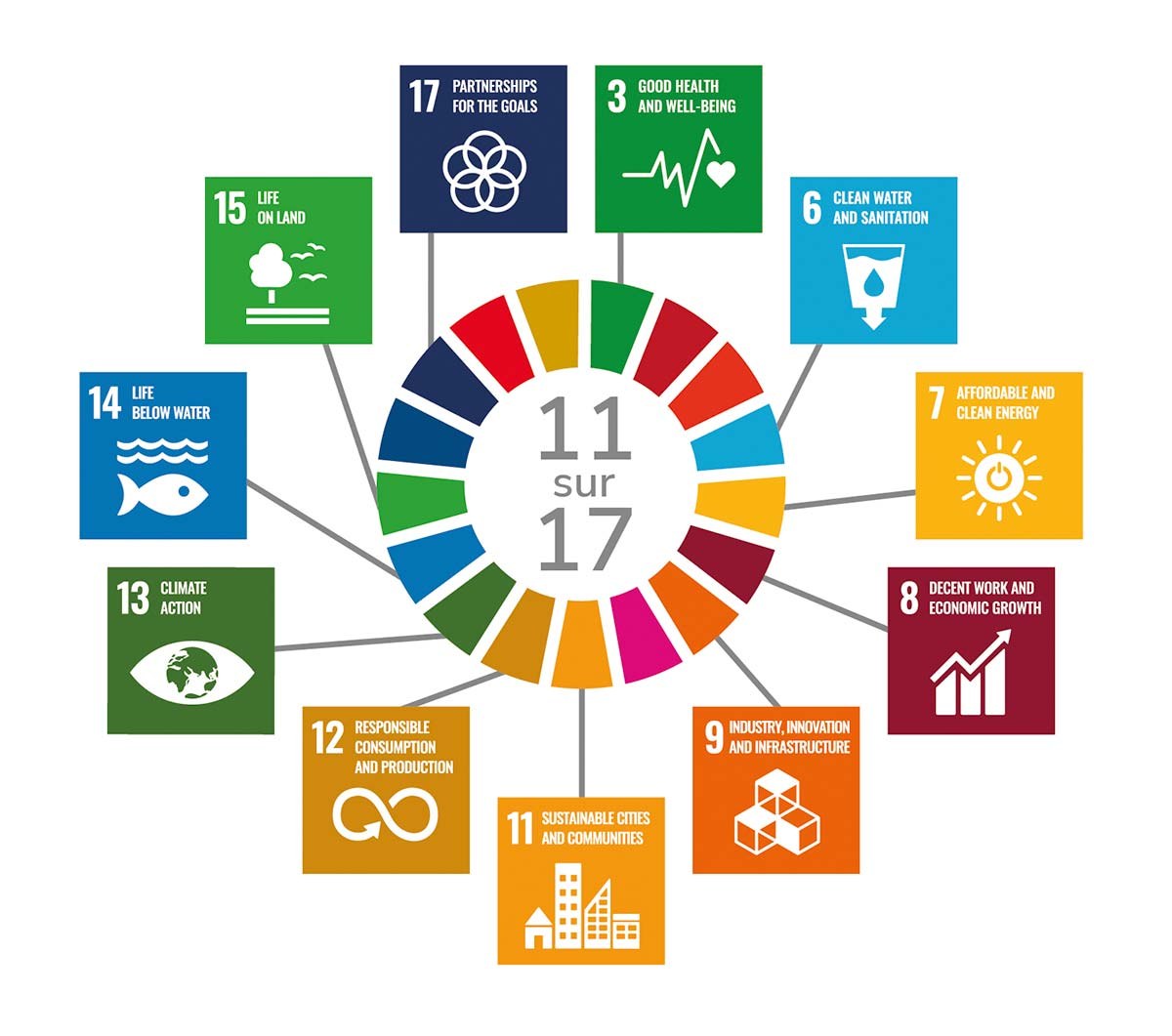
Ecosystem services
Licensing opportunity
Our patent is a significant advance for renewable energy in buildings. It offers a unique opportunity to stand out from the competition while fighting climate change and biodiversity loss, and it solves growing problems linked to the energy and ecological transitions.
Company, public or private authority: by taking a licence (sole, non-exclusive, exclusive, territorial, sublicence), you gain access to leading intellectual property, with the ongoing support of our team.
Implementation
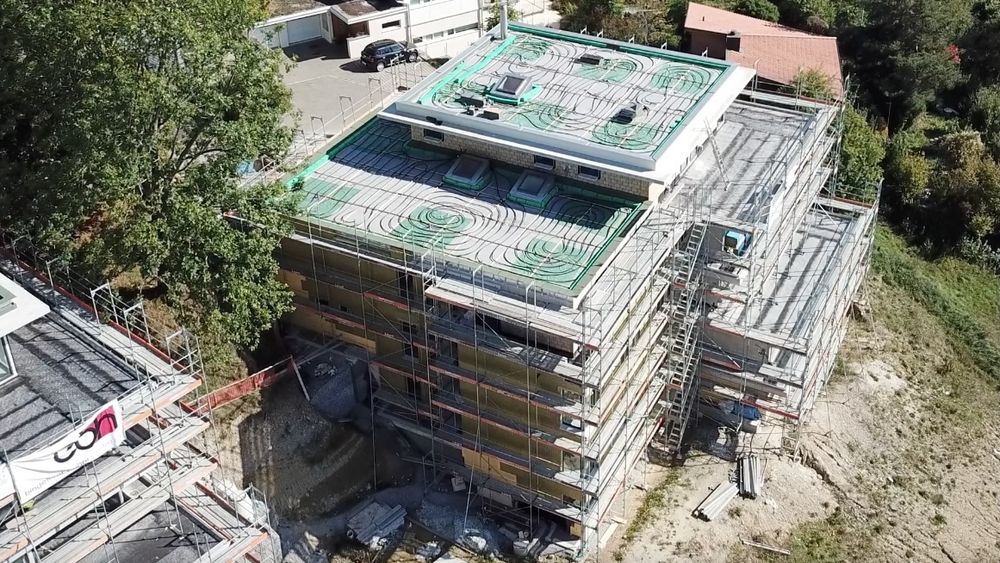
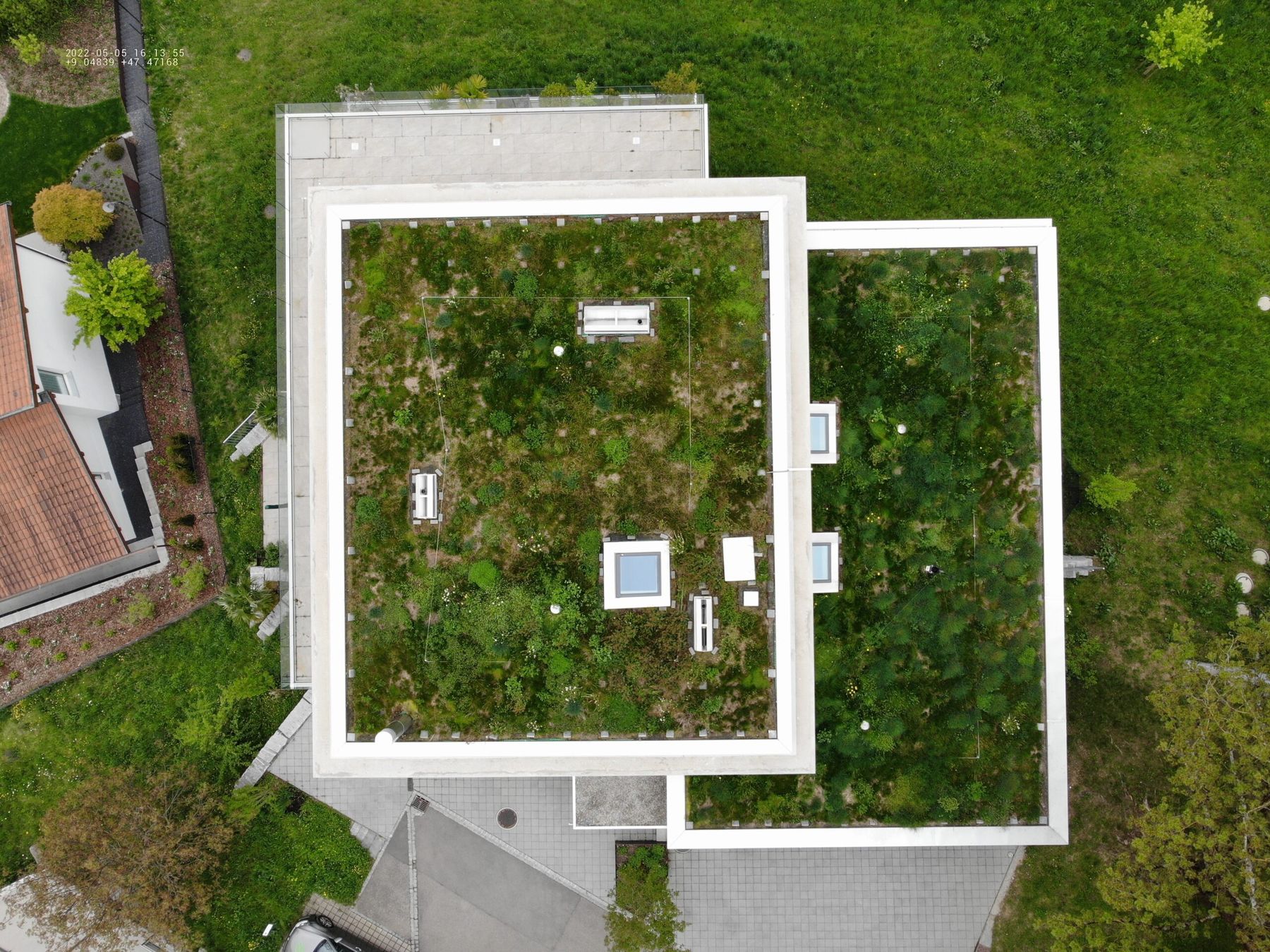
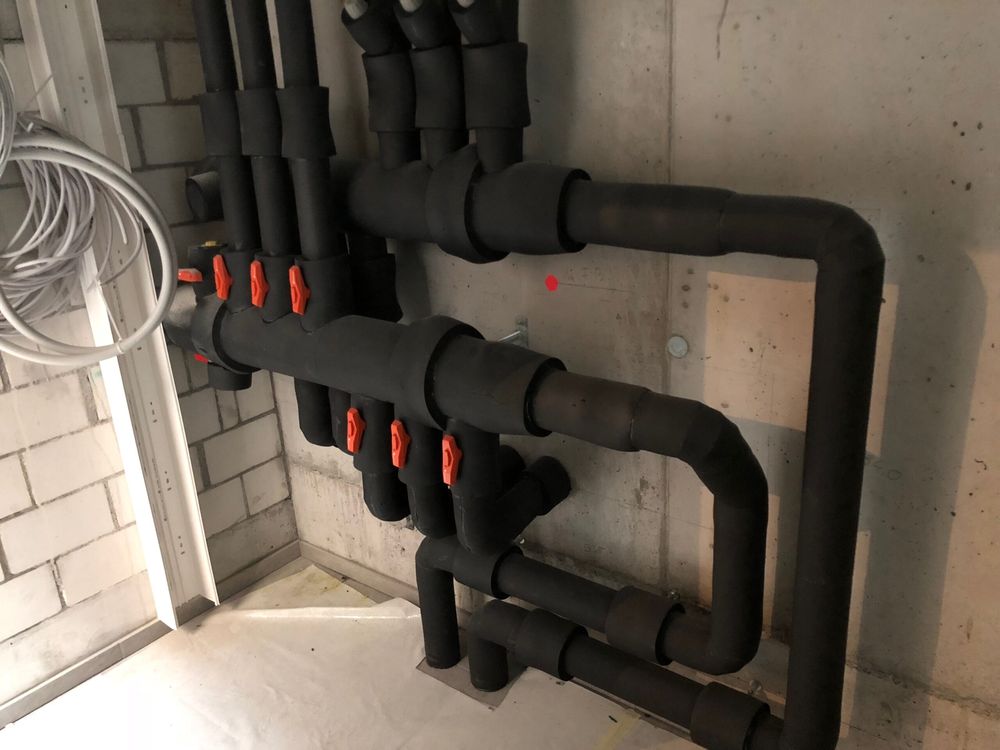
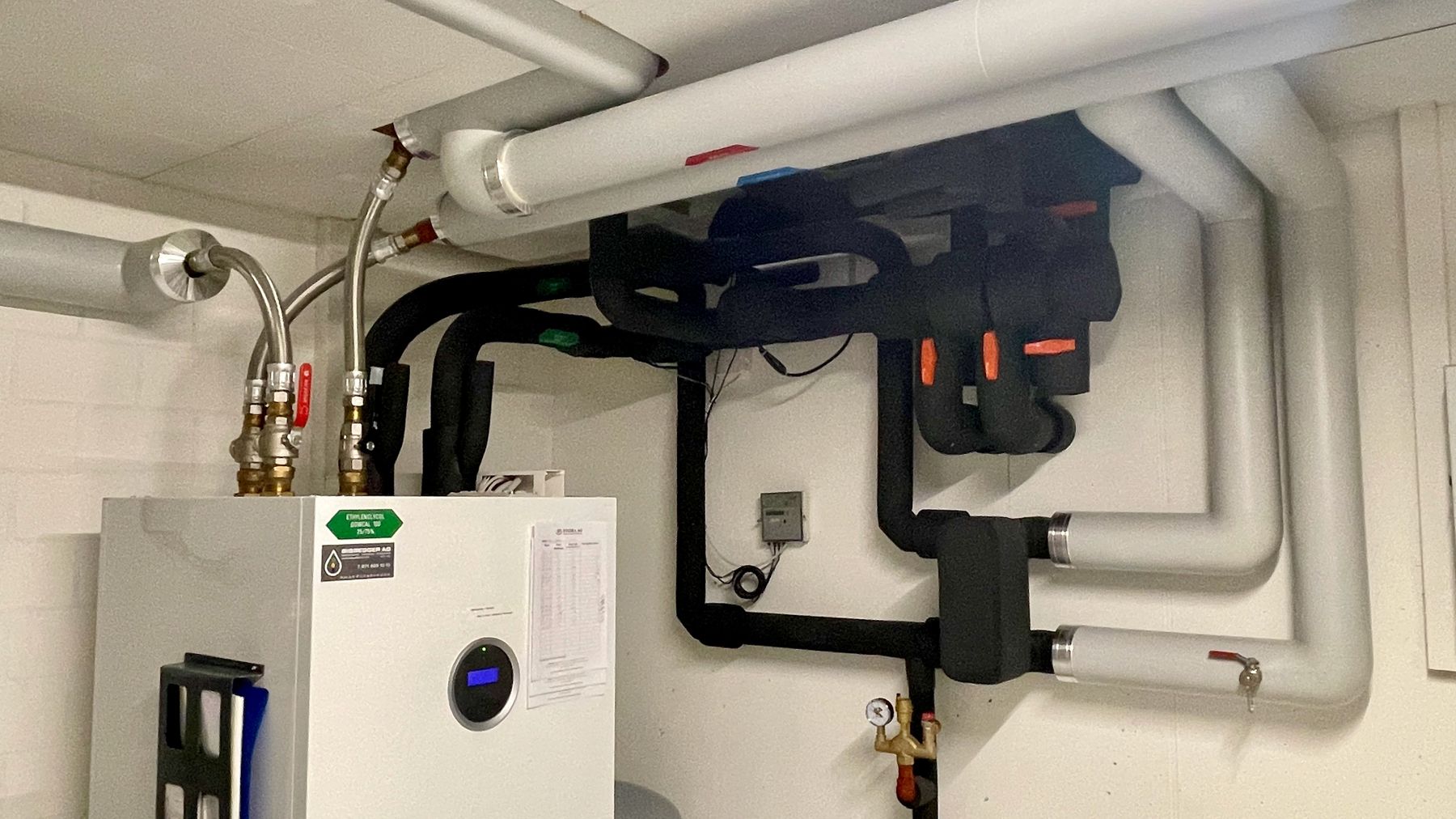
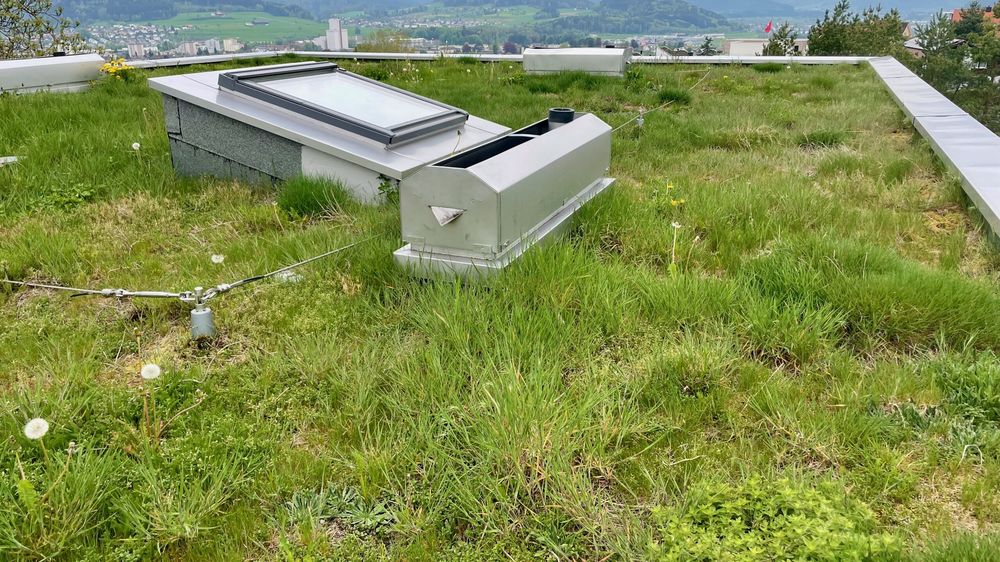
A heat exchange system on a roof: a substrate partly saturated with water, topped by a vegetation layer that promotes condensation and evapotranspiration, and a collector network connected to a pump.
News
BioThermal HP presented at the Maison de la Rivière as part of the Festival du Film Vert.
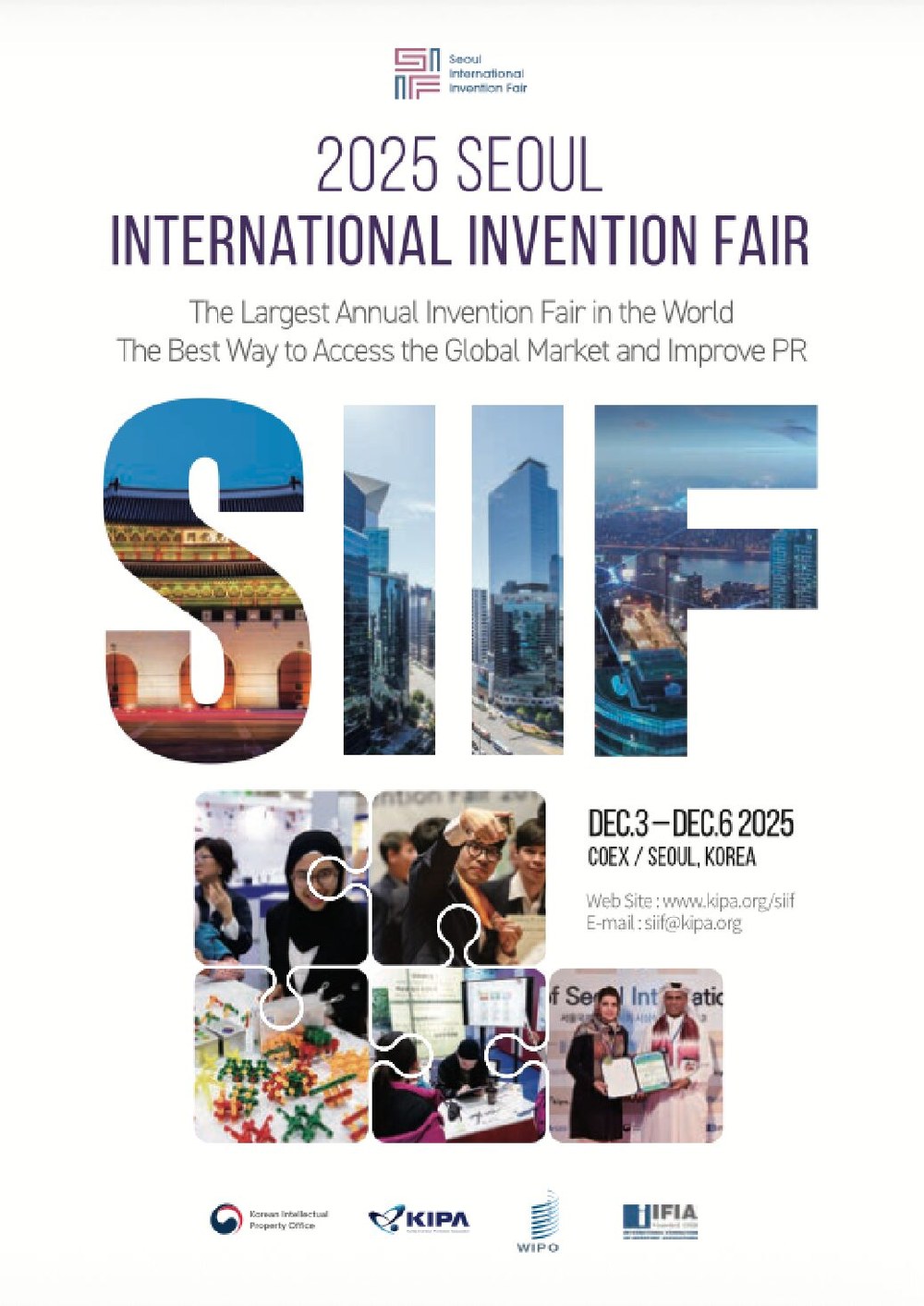
Seoul International Invention Fair, South Korea.
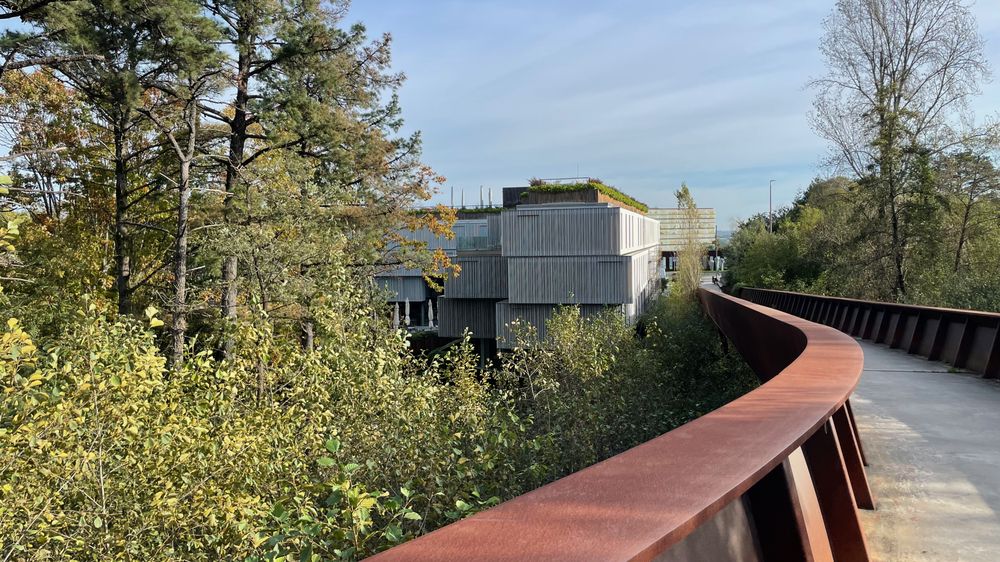
Exploring opportunities and ideas.
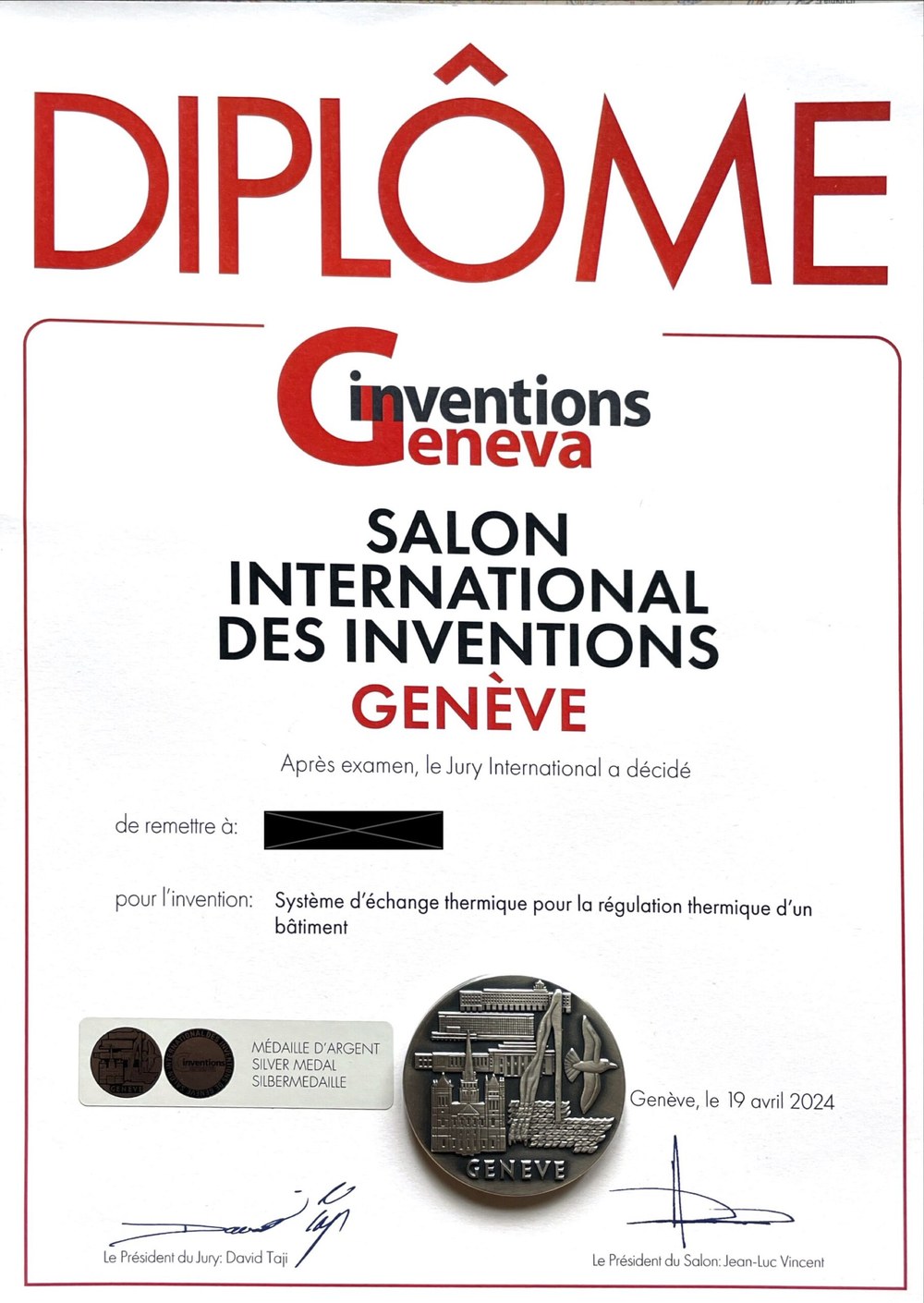
A fine award from the international jury of experts at the International Exhibition of Inventions of Geneva.

49th edition, Palexpo.

Exploring opportunities and ideas.
Contact
Partnership, licensing, patent information or simple curiosity: we are open to any collaboration and exchange of information, and we reply as quickly as possible.
 An innovation byImpact Biosystem – impactbiosystem.eco